
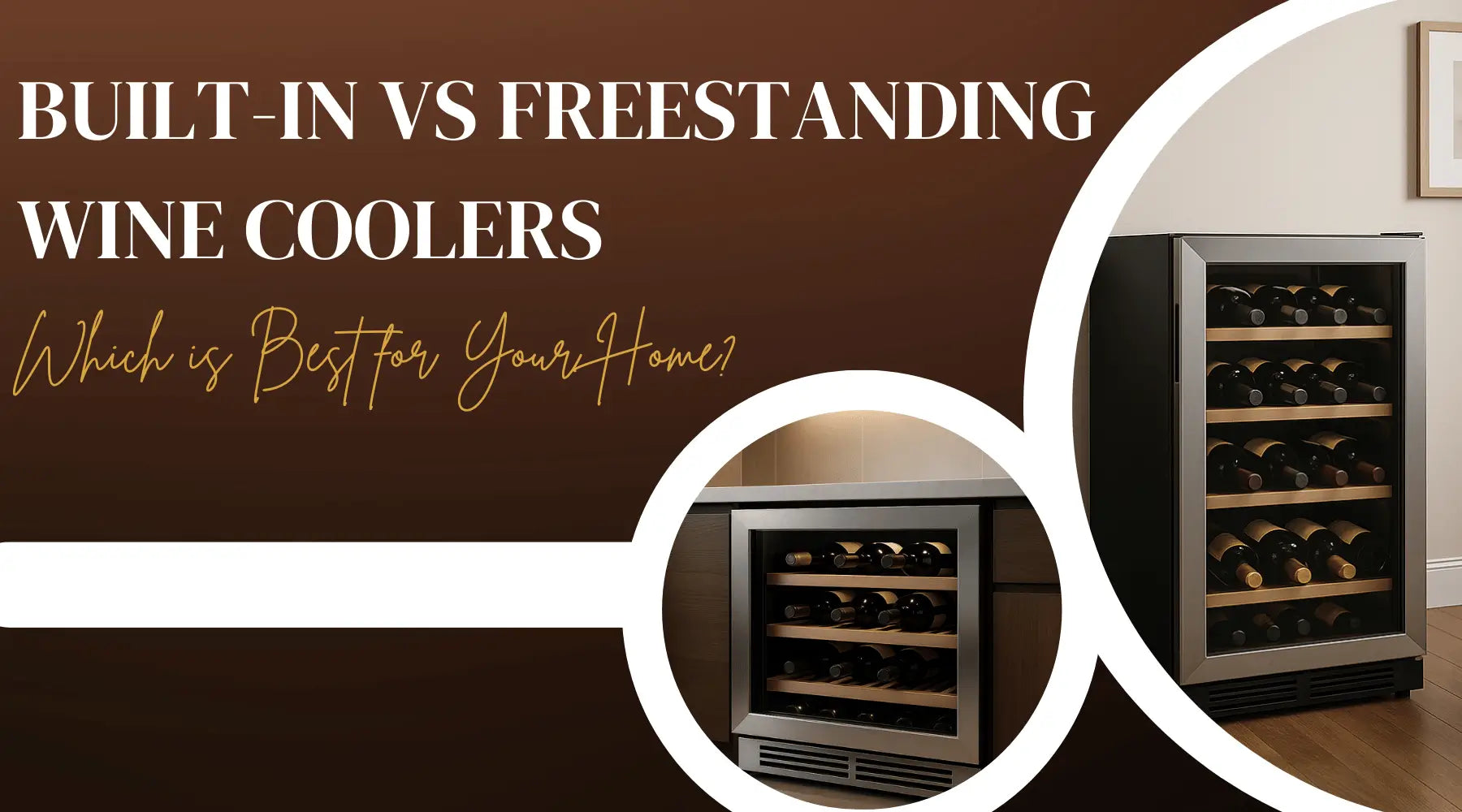
Introduction: Choosing the Best Wine Cooler for Your Home
Choosing the best wine cooler for home use can be challenging, especially with so many wine fridge options available. In this wine cooler comparison, we’ll break down the difference between built-in and freestanding wine coolers, explore their pros and cons, and help you decide which type fits your space, style, and wine collection needs.
For a more detailed overview of how to choose the right wine storage solution, check out our complete Wine Cooler Buying Guide. If you’re curious about the ideal temperature for storing your wine, don’t miss our Wine Storage Temperature Guide for expert insights.
If you’re deciding between a wine fridge and a full wine cellar, our Wine Fridge vs Wine Cellar article can help you weigh the pros and cons of each.
Types of Wine Coolers: An Overview
Before diving into the built-in vs freestanding wine coolers debate, it’s helpful to understand the main types of wine coolers on the market:
- Freestanding Wine Coolers: Standalone units that can be placed almost anywhere with proper ventilation. Browse our freestanding wine coolers collection for flexible, portable options.
- Built-in Wine Coolers: Designed for installation under counters or within cabinetry for a seamless look. Discover our built-in wine coolers collection for a custom kitchen fit.
- Integrated Wine Coolers: Fully enclosed by cabinetry, offering a custom, luxury appearance. For more inspiration, see our undercounter wine coolers.
- Dual-Zone and Multi-Zone Coolers: Allow different temperatures for reds, whites, and sparkling wines. Explore our dual-zone wine coolers for versatile storage.
For smaller spaces, check out our countertop wine coolers.
If you’re planning a larger collection or dedicated wine room, see our guide on the best wine cellar cooling units by cellar type and explore our wine cellar cooling units collection.
Each type offers unique advantages, so your choice depends on your collection size, available space, and design preferences. For more on bottle capacity, read our What Size Wine Cooler Do I Need? guide. If you’re interested in the differences between single and dual-zone models, visit Single vs Dual Zone Wine Coolers.
Built-in Wine Coolers Explained

A built-in wine cooler is designed to fit snugly under a counter or within a kitchen cabinet, giving your kitchen a seamless, integrated look. These units feature front ventilation, allowing them to be installed flush with surrounding cabinetry without overheating.
Pros of Built-in Wine Coolers:
- Sleek, custom appearance—blends with kitchen design
- Can increase home resale value
- Often offer multiple temperature zones
- Available in luxury and energy-efficient models
Cons of Built-in Wine Coolers:
- Typically higher in price
- Installation can be more complex
- Less portable once installed
Built-in Wine Fridge Reviews & Tips:
- Look for models with quiet operation and energy efficiency. See our residential wine coolers for home-friendly options.
- Check for adjustable shelving and humidity control.
- Read built-in wine fridge reviews to find top-rated wine coolers for 2025.
For advanced features, compare brands like Cavavin, Smith & Hanks, U-Line, Fulgor Milano Wine Coolers, Hestan Wine Coolers, Bertazzoni Wine Coolers, and Liebherr Wine Coolers.
For those seeking a luxury kitchen look, see our Best Wine Storage Solutions for Luxury Kitchens and Glass Wine Cellar Cooling Solutions.
If a quiet kitchen is important, explore our Silent Wine Cooling Systems.
Freestanding Wine Coolers Explained

A freestanding wine cooler is a versatile, standalone unit that can be placed in any room with enough airflow. These wine fridges are perfect for those who want flexibility or may move their cooler between rooms.
Pros of Freestanding Wine Coolers:
- Easy to install—just plug in and go
- Generally more affordable than built-in options
- Portable—move it if you change your layout or relocate
- Wide range of sizes and styles
Cons of Freestanding Wine Coolers:
- Require ample space around the unit for ventilation
- May not blend seamlessly with cabinetry
- Some models are noisier than built-ins
Best Freestanding Wine Cooler for Kitchen:
- Choose quiet wine coolers for home to minimize noise.
- Consider energy-efficient models to save on utility bills.
For unconventional placements, read our Garage & Outdoor Wine Cooler Guide.
Built-in vs Freestanding Wine Coolers: Key Differences

Installation & Space Requirements
Built-in wine coolers are designed for undercounter or cabinet installation, with front-facing vents. They require precise measurements and professional installation for a flush fit. Discover our built-in wine coolers for more details.
Freestanding wine coolers need several inches of clearance on all sides for proper air circulation. They should not be built into cabinetry, as this can cause overheating. Browse our freestanding wine coolers for flexible options.
For installation tips and requirements, see our Wine Cellar Cooling Installation Requirements and How to Build a Wine Cellar.
Ventilation & Air Circulation
- Built-in: Front ventilation; minimal side/back clearance needed
- Freestanding: Rear or side ventilation; requires space on all sides
For a deep dive into cooling technology, see Thermoelectric vs Compressor Wine Coolers.
Aesthetics & Kitchen Design
- Built-in: Seamless, integrated look; matches other appliances
- Freestanding: Standalone appearance; more visible in the room
For more design ideas, check out our Best Wine Storage Solutions for Luxury Kitchens.
Flexibility & Portability
- Built-in: Fixed in place after installation
- Freestanding: Easily moved or relocated
Capacity & Sizing Options
- Built-in: Wide range of sizes, often larger for bigger collections. Explore best wine coolers by bottle capacity.
- Freestanding: Available from compact to large, but check space requirements. See our full wine coolers collection.
Cost Comparison
- Built-in: Higher upfront cost, but may add home value. For details, see Wine Cellar Cooling System Cost.
- Freestanding: Lower purchase price, but less impact on property value.
To help you decide if a wine cooler is a worthwhile investment, read Are Wine Coolers Worth It?.
For those considering a custom wine room or expanding storage, explore our wine cellar cooling units collection.
Should I Get a Built-in or Freestanding Wine Fridge?
When deciding between a built-in vs freestanding wine cooler, consider:
- Available Space: Built-ins are ideal for undercounter or custom cabinetry; freestanding is best if you have open space.
- Collection Size: Built-in models often accommodate larger collections, but freestanding options can be expanded or replaced as needed.
- Design Preferences: Choose built-in for a seamless look, freestanding for flexibility.
- Budget: Freestanding units are typically more affordable, but built-ins may save money in the long run and increase home value. For more on long-term value and system lifespan, see Wine Cooling System Lifespan.
- Future Needs: If you plan to move or grow your collection, freestanding offers more adaptability.
To avoid common mistakes, visit Wine Cellar Cooling Mistakes.
If you’re interested in different cooling system types, check out Self-Contained vs Split Wine Cooling Systems and Through-the-Wall vs Ducted Wine Cooling.
Product Recommendations & Buying Guide
Looking to buy a wine cooler online? Here are some tips for finding top-rated wine coolers 2026:
- Compare built-in wine fridge reviews for quiet, luxury, and energy-efficient models.
- For kitchens, seek out quiet wine coolers for home use.
- Look for adjustable shelving, dual-zone cooling, and UV protection.
- Check warranty and customer service ratings.
- For multi-purpose storage, consider our wine beverage centers.
For brand comparisons, see our guides on WhisperKOOL vs Breezaire.
Conclusion

Both built-in and freestanding wine coolers offer unique benefits. The best wine cooler for home depends on your space, style, and wine storage needs. Use this wine cooler comparison to guide your decision, and enjoy perfectly chilled wine year-round.
Ready to discover the best wine fridge options for your home? Explore our wine coolers collection, built-in wine coolers, freestanding wine coolers, and our complete buying guide to find your perfect match!