
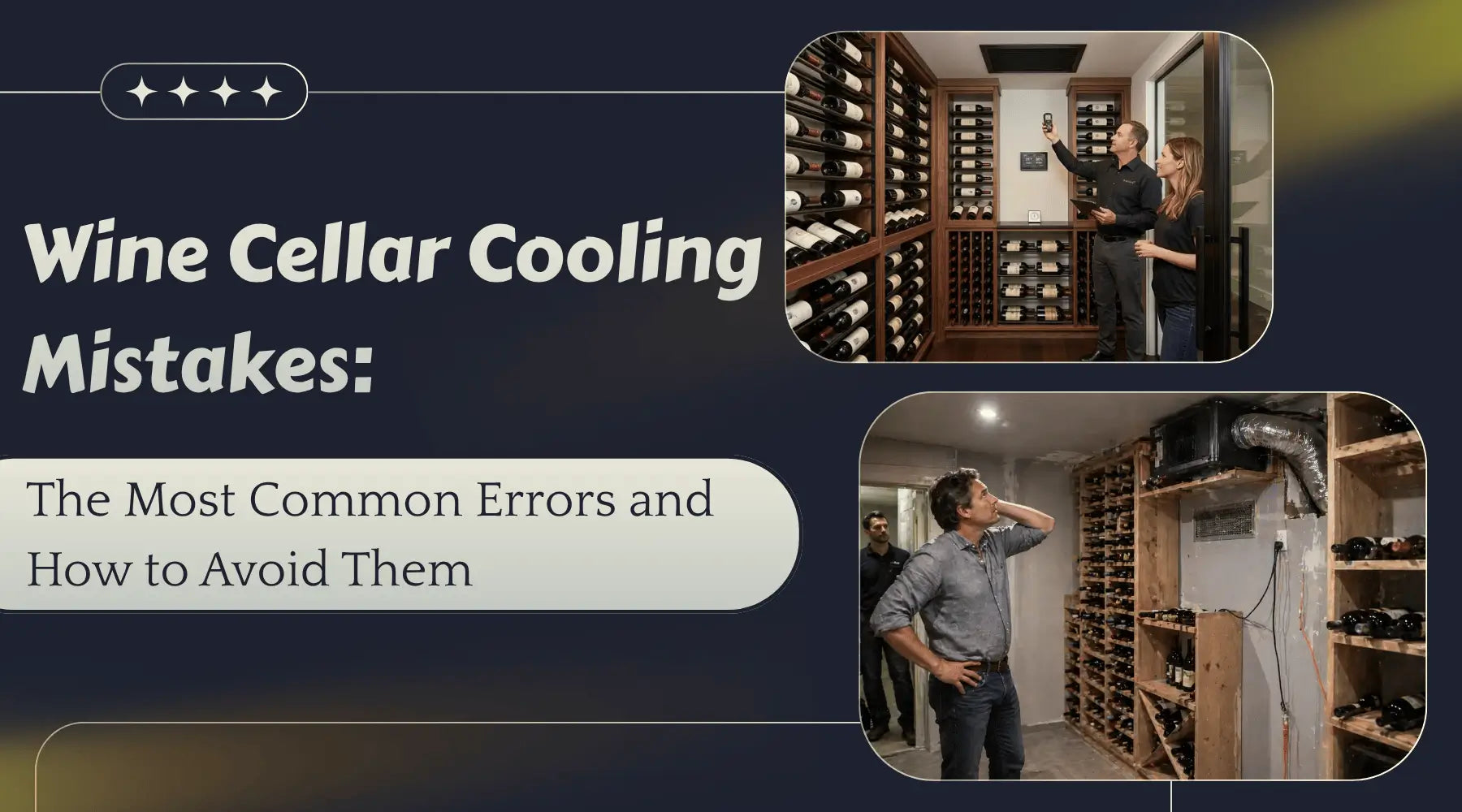
Introduction: Why Wine Cellar Cooling Mistakes Matter
A well-designed wine cellar is more than just a luxury—it’s an investment in your wine collection’s longevity and quality. Yet, even passionate collectors and homeowners can fall victim to common wine cellar cooling mistakes that compromise the environment and put their bottles at risk. This guide will walk you through the most frequent errors, why they matter, and how to avoid them, so your wine ages exactly as intended.
For an in-depth overview of choosing the right system, don’t miss our Wine Storage Cooling Systems Buying Guide.
Why Proper Wine Cellar Cooling Matters

Wine is sensitive to its environment. Fluctuations in temperature and humidity can accelerate aging, dry out corks, grow mold, and ruin labels. A quality wine cellar cooling system, paired with thoughtful design, creates the stable, climate-controlled conditions essential for ideal wine storage. Avoiding cooling mistakes is critical to protecting your wine and your investment.
If you want to compare different storage options, see our Wine Coolers collection.
Common Wine Cellar Cooling Mistakes (and How to Avoid Them)
1. Sizing Errors: Wrong BTU and Heat Load Miscalculations
Many people select a cooling unit based only on the cellar’s square footage or volume. In reality, the right unit size depends on a full heat load calculation, which should account for:
- Insulation quality and R-value
- Glass exposure (walls, doors)
- Ambient (external) temperatures
- Lighting and equipment inside the cellar
- Door locations and frequency of use
Why it matters: A unit that’s too small will run constantly and struggle to maintain the set temperature, leading to premature failure. An oversized unit can cause humidity swings and inefficient cycling.
How to avoid: Always perform a detailed heat load calculation or consult a wine cellar cooling expert before purchasing a unit. For more on how to size your system, check our Size Wine Cellar Cooling Unit guide and browse our full Wine Cellar Cooling Units collection for models that fit every cellar size.
If you’re unsure about bottle capacity, our Best Wine Coolers by Bottle Capacity post can help.
2. Improper Insulation and Vapor Barrier Mistakes
No cooling system can compensate for poor insulation or a missing vapor barrier. These are foundational to efficient temperature and humidity control.
Why it matters: Insufficient insulation leads to temperature fluctuations and wasted energy. A missing or misplaced vapor barrier allows moisture to enter, causing condensation, mold, and structural damage.
How to avoid: Use high R-value insulation throughout the cellar and install a continuous vapor barrier on the warm side. Seal all seams and penetrations meticulously. For step-by-step advice, see How to Build a Wine Cellar.
3. Choosing the Wrong Cooling System
Not all cooling systems are suited for wine cellars. Standard home HVAC units or portable air conditioners are not designed for the unique temperature and humidity needs of wine storage.
Why it matters: Non-specialized units can dry out corks, fail to maintain proper humidity, and put your wine at risk.
How to avoid: Select a wine cellar-specific cooling system. Consider the differences between self-contained, ducted split, and through-the-wall systems, and choose what best fits your cellar’s size, layout, and noise requirements.
To compare built-in and freestanding options, visit Built-In Wine Coolers and Freestanding Wine Coolers.
You might also find our Self-Contained vs. Split Wine Cooling Systems article helpful.
4. DIY Installation Errors

Installing a wine cooling unit involves more than plugging in a device. Common installation mistakes include:
- Improper ducting or vent placement
- Inadequate electrical setup
- Lack of vibration isolation
Why it matters: Incorrect installation can void warranties, reduce efficiency, and lead to early system failure.
How to avoid: Unless you have HVAC expertise, hire a professional for wine cellar cooling system installation. For more on requirements, see our Wine Cellar Cooling Installation Requirements.
5. Ventilation and Airflow Issues
Proper airflow is crucial for your cooling unit’s performance. Mistakes in this area include:
- Mixing exhaust and intake air
- Pulling intake air from inside the cellar
- Blocking vents with racks or furniture
Why it matters: Poor airflow can cause the unit to overheat, recycle hot air, and reduce cooling efficiency and lifespan.
How to avoid: Ensure fresh air intake comes from outside the cellar, and exhaust is vented away from the unit. Keep vents unobstructed and plan for adequate air circulation. If you’re considering a through-the-wall system, browse our Through-the-Wall Wine Cellar Cooling Units.
6. Neglecting Humidity Control
Both low and high humidity can harm your wine. Low humidity dries out corks, while high humidity encourages mold and damages labels.
Why it matters: Improper humidity levels compromise wine quality and cellar aesthetics.
How to avoid: Choose a cooling system with built-in humidity control or use a dedicated humidifier/dehumidifier. Regularly monitor humidity levels and adjust as needed. Learn more in our Wine Storage Humidity Control guide.
For collectors with varying needs, our Dual Zone Wine Coolers help maintain ideal conditions for different wine types.
7. Ignoring External and Ambient Temperatures

The surrounding environment affects your cellar’s cooling needs. Placing a cellar in a hot garage or near exterior walls increases the cooling load.
Why it matters: Most cooling units are rated for a maximum temperature differential (often 30°F). If the ambient temperature is too high, your unit may not keep the cellar cool enough.
How to avoid: Factor in the ambient environment when planning your cellar. Choose a unit rated for higher external temperatures if necessary, and improve insulation as needed. For guidance on unique environments, see our Garage & Outdoor Wine Cooler Guide.
8. Lack of Monitoring, Maintenance, and Redundancy
Even the best systems need regular checks and maintenance. Neglecting this can lead to unnoticed failures.
Why it matters: A failing cooling system can spoil your collection before you notice a problem.
How to avoid: Install monitoring systems that alert you to temperature or humidity deviations. Schedule routine maintenance, and consider backup systems for high-value collections. For more, visit our Wine Cooler Cleaning and Maintenance article and explore our Wine Cooling System Lifespan guide.
Cellar Design Considerations

A successful wine cellar isn’t just about the cooling system—it’s about the entire environment. Here are broader design elements to keep in mind:
Location Selection & Ambient Conditions
Choose a space with stable ambient conditions, away from exterior walls and heat sources. Basements and interior rooms are ideal for consistent climate control.
Insulation & Vapor Barriers
Invest in high-quality insulation and a continuous vapor barrier. This foundational step will make cooling more efficient and reliable. For more tips, visit How to Build a Wine Cellar.
Glass Exposure
Glass walls and doors add visual appeal but increase the heat load. Use insulated, wine cellar-rated glass and factor glass exposure into your cooling calculations.
Racking Selection & Bottle Depth
Select racks that accommodate various bottle sizes, provide proper bottle depth, and allow for air circulation. Consider label visibility and future collection growth.
Lighting & UV Protection
Install LED lighting to minimize heat and UV exposure. Avoid direct sunlight and high-heat bulbs, which can damage wine and labels.
Vibration Control
Minimize vibration by using specialized mounts for cooling units and ensuring sturdy racking. Vibration can disturb sediment and affect wine aging.
Monitoring & Redundancy
Use monitoring systems for temperature and humidity, with alarms for deviations. For valuable collections, consider redundant cooling or power systems.
Planning for Future Needs
Design your cellar with growth in mind. Modular racking and flexible layouts ensure your cellar remains functional as your collection expands. For help with sizing, visit What Size Wine Cooler Do I Need?.
Conclusion

Avoiding wine cellar cooling mistakes is vital for protecting your collection and ensuring every bottle ages perfectly. By understanding and addressing common errors—from sizing and insulation to airflow and monitoring—you’ll create a cellar that delivers both performance and peace of mind. When in doubt, consult a wine cellar expert and invest in professional installation and maintenance.
If you’re ready to explore the best solutions for your needs, browse our Wine Cellar Cooling Units, Dual Zone Wine Coolers, or our complete Wine Coolers collection for the perfect fit.