
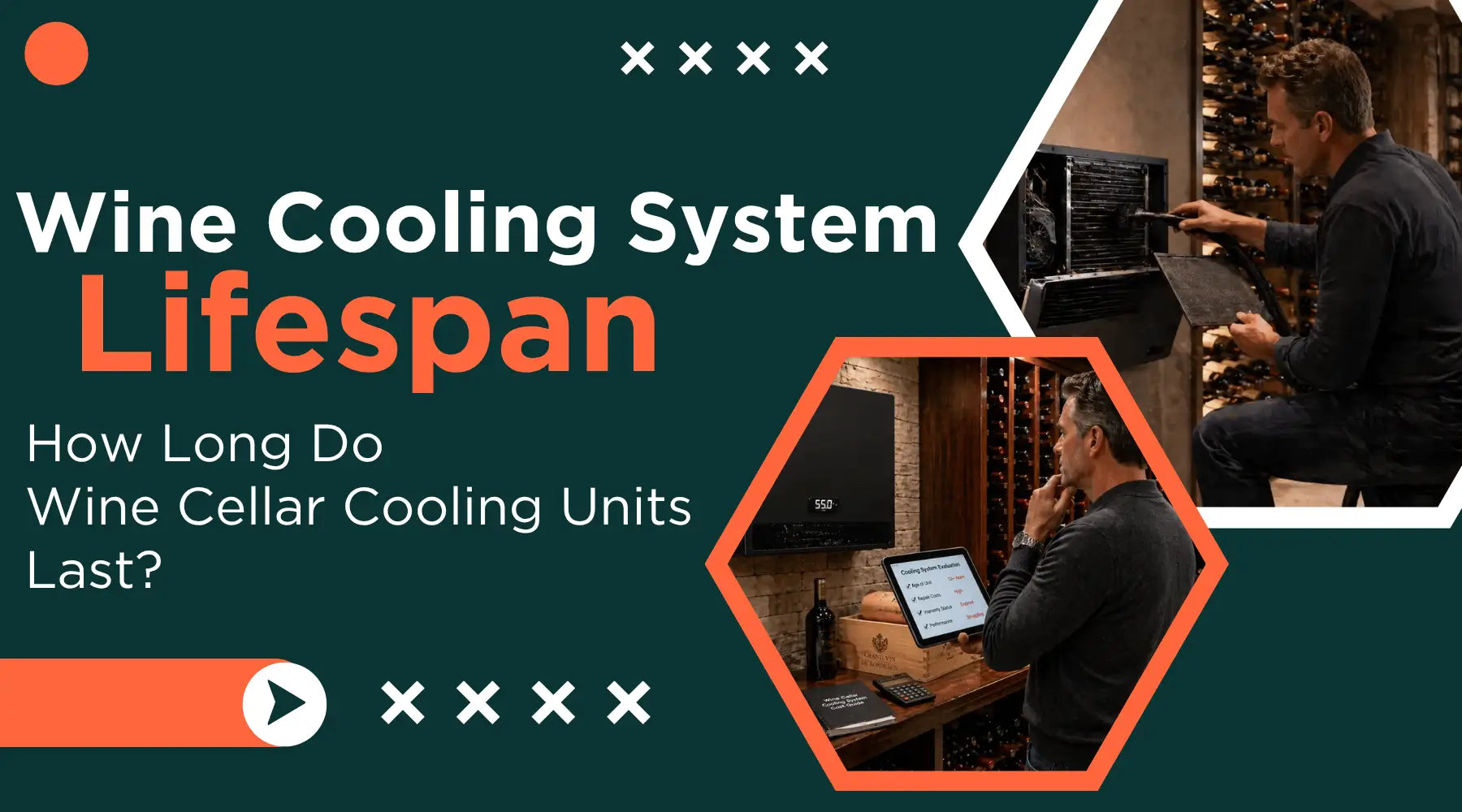
Understanding Wine Cooling System Lifespan: Why It Matters
If you’re passionate about wine, you know that proper storage is essential to preserve flavor, aroma, and value. At the heart of any serious wine storage solution is the wine cooling system—a specialized unit designed to maintain ideal temperature and humidity. But how long does a wine cooling system last? What factors affect its lifespan, and how do you know when it’s time for a replacement? This guide covers everything you need to know about wine cooling system lifespan, maintenance, and making the right investment for your collection.
For a comprehensive overview of choosing the right system, see our Wine Cooling System Buying Guide.
What Is a Wine Cooling System?

A wine cooling system is a dedicated climate control unit built to keep your wine cellar at a stable temperature (typically around 55°F) and proper humidity (usually 60–70%). Unlike standard HVAC systems, wine cooling units are engineered to maintain humidity, preventing corks from drying out and protecting your wine from oxidation. This level of control is crucial for long-term wine storage and aging.
Explore our full range of wine cellar cooling units to find the right fit for your cellar.
If you’re still deciding between different types of cooling systems, check out our detailed comparison of self-contained vs. split wine cooling systems and our guide on through-the-wall vs. ducted wine cooling.
Average Lifespan of Wine Cooling Systems
The lifespan of a wine cooling system depends on its type, brand, installation quality, and maintenance. Here’s a look at the typical life expectancy for common types:
- Self-contained units: Average 5–10 years. See our selection of self-contained ducted wine cellar cooling units for reliable options.
- Ducted units: Typically last 10–15 years. Discover ducted split wine cellar cooling units for long-lasting performance.
- Split systems: Can last up to 20 years with proper care. Browse split wine cellar cooling systems from top brands like WhisperKOOL and Breezaire.
- Wine fridges/coolers: Generally last 10–15 years. Shop our wide assortment of wine coolers.
Looking for the best fit for your space? Our guide to best wine cellar cooling units by cellar type will help you choose the right system.
What Affects Wine Cooling System Lifespan?
Several factors can influence how long your wine cooling unit lasts:
- Installation quality: Professional installation ensures optimal performance and reduces the risk of premature wear. Learn more about wine cellar cooling installation requirements.
- Maintenance: Regular cleaning and servicing prevent dust buildup and mechanical strain. For practical tips, see our wine cooler cleaning and maintenance guide.
- Environment: High temperatures, dust, and humidity can shorten lifespan if not managed. For advice on managing these factors, visit our wine storage temperature guide and wine storage humidity control.
- Usage habits: Frequent door openings or temperature fluctuations force the system to work harder. Not sure what size you need? Read what size wine cooler do I need?
- System quality: Investing in a reliable, well-reviewed brand pays off in longevity. Compare WhisperKOOL vs. Breezaire for insights into top brands.
- Sizing: An undersized or oversized unit may experience more wear due to inefficiency. For help with sizing, see our size wine cellar cooling unit guide.
Maintenance and Longevity: How to Extend Your Cooling Unit’s Life

Routine maintenance is key to maximizing your wine cooling system’s lifespan. Here’s how to keep your unit running smoothly:
- Follow the owner’s manual: Always use manufacturer-recommended care steps.
- Clean the condenser: Every six months, remove dust and debris with a brush or vacuum.
- Check air filters: Clean or replace regularly to ensure good airflow.
- Monitor for moisture: Wipe away excess condensation, especially in humid conditions.
- Schedule professional inspections: Annual service can catch issues early and extend system life.
- Handle with care: Avoid unnecessary stress on doors and shelves.
For a step-by-step guide, see our wine cooler cleaning and maintenance article.
Regular maintenance not only increases the average life of your wine cooling system but also ensures efficient operation and consistent wine storage conditions.
Signs Your Wine Cooling System Is Failing
Watch for these warning signs that your wine cooling system may need repair or replacement:
- Inconsistent temperature or humidity
- Unusual noises or vibrations
- Frequent cycling or failure to operate
- Visible leaks or excessive condensation
- Rising energy bills or reduced cooling efficiency
If you want to avoid common pitfalls, read about wine cellar cooling mistakes.
Addressing these issues early can prevent wine spoilage and more costly repairs down the line.
Replacement: When and Why

Wondering how often to replace your wine cooling unit? Consider these factors:
- Age: If your system is approaching or beyond its average lifespan, replacement may be more cost-effective than repeated repairs.
- Repair costs: Frequent or expensive fixes can add up quickly. For budgeting, review our wine cellar cooling system cost guide.
- Warranty: Check if your unit is still covered for repairs or replacement.
- Performance: If your system struggles to maintain stable conditions, a new unit may be the best investment.
If you’re considering a new installation or an upgrade, explore through-the-wall wine cellar cooling units for straightforward setup, or built-in wine coolers and freestanding wine coolers for flexible storage solutions.
Replacement costs vary depending on system type, size, and brand, but investing in a durable, efficient unit protects the value of your wine collection.
Choosing a Durable Wine Cooling System
When shopping for a new cooling unit, look for:
- Proven reliability and strong warranties. For proven durability, consider premium brands like WhisperKOOL or Breezaire.
- Energy efficiency and proper sizing for your cellar. Not sure where to start? Check out our best wine coolers by bottle capacity.
- Features like quiet operation and smart controls. Explore our silent wine cooling systems.
- Positive reviews for long-term durability.
Premium brands and professional installation can offer peace of mind and a longer return on your investment. For installation tips, see our wine cellar cooling installation requirements.
Conclusion

The lifespan of your wine cooling system depends on its type, quality, installation, and care. With regular maintenance and timely replacement, your system can protect your wine collection for decades. Invest in a reliable unit, follow a consistent maintenance schedule, and stay alert to signs of trouble—your wine deserves nothing less.
Ready to upgrade or replace your unit?
Browse our curated collections of wine cellar cooling units and wine coolers to find the perfect match for your needs.