
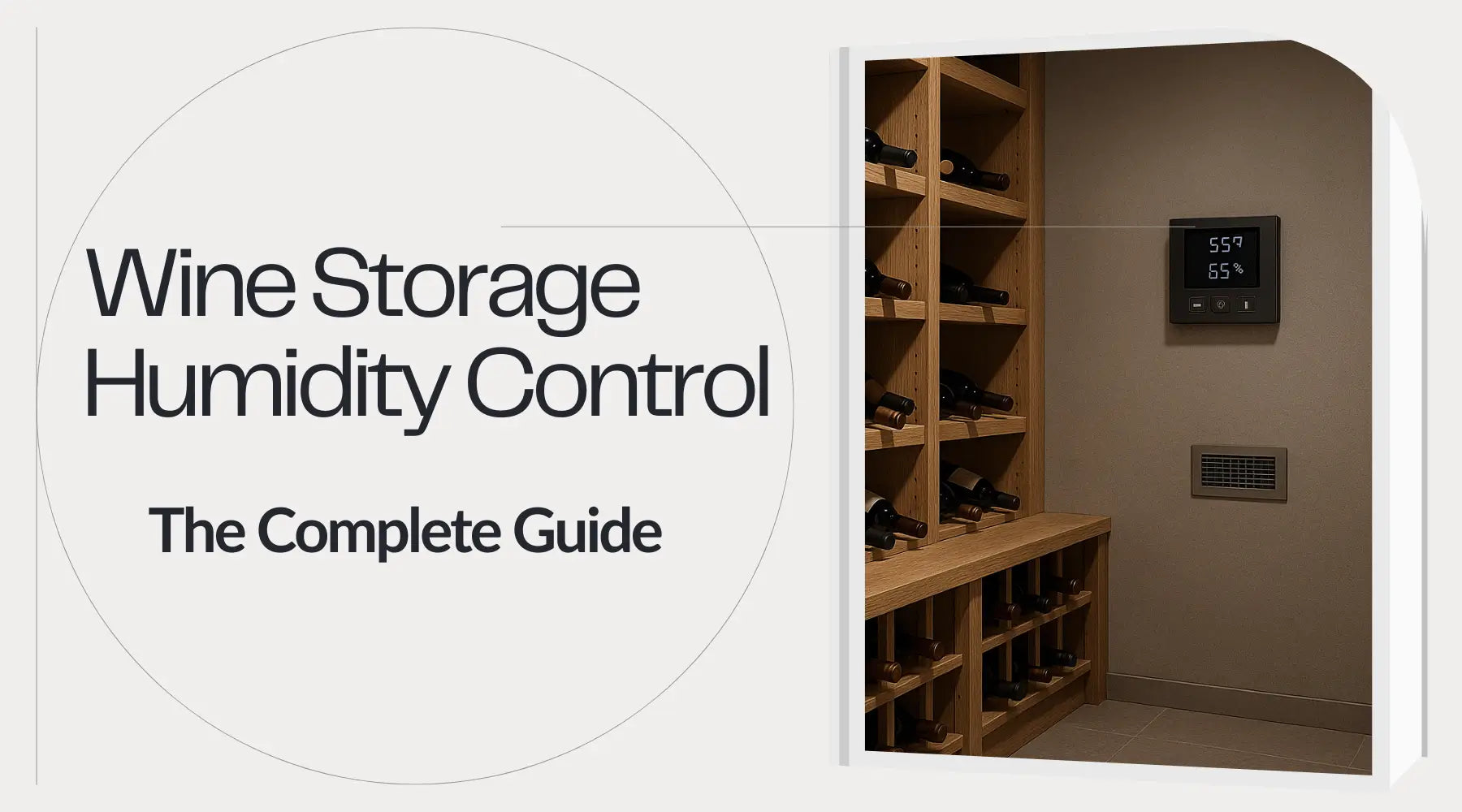
Introduction to Wine Storage Humidity
When it comes to preserving the quality and longevity of your wine collection, the right wine storage humidity is just as important as temperature. Many collectors focus on keeping their wine cool, but humidity for wine storage plays a crucial role in ensuring each bottle ages gracefully. Understanding and maintaining the ideal humidity for a wine cellar helps prevent spoilage and protects your investment. This guide will explain why humidity matters, how to achieve the best humidity for storing wine, and the tools you need for optimal wine storage conditions.
If you’re planning a wine cellar project, don’t miss our guide on how to build a wine cellar for step-by-step instructions. For a more detailed look at choosing the right equipment, check out our comprehensive wine storage and cooling systems buying guide.
Why Humidity Matters for Wine Storage

Humidity affects wine in several important ways. The cork, which seals most fine wines, is a natural material that can dry out or become moldy if exposed to improper humidity levels. If the air is too dry, corks shrink and allow air into the bottle, leading to oxidation and spoilage. If it’s too humid, you risk mold growth on corks and labels, which can damage both the wine and its presentation.
How humidity affects wine aging: Proper humidity slows down unwanted evaporation and helps maintain a tight seal. This is essential for the wine to age as intended, preserving its flavors and aromas. So, does humidity affect wine aging? Absolutely. Both too little and too much humidity can impact how your wine matures over time.
For more insights on how temperature and humidity together influence your collection, see our wine storage temperature guide.
Ideal Humidity for Wine Cellars
The ideal humidity for a wine cellar is generally between 60% and 70% relative humidity. This range keeps corks moist and elastic without encouraging mold growth. The best humidity for storing wine is often cited as around 65%, but anything in the 60–70% window is considered safe.
If you’re planning a custom wine cellar, learn how to size a wine cellar cooling unit for optimal humidity and temperature control. For a breakdown of best wine cellar cooling units by cellar type, explore our detailed comparison to find the perfect fit for your space.
What humidity is too high for wine?
If humidity rises above 75%, you may see condensation, musty odors, or mold. At this point, wine labels can peel or become stained, and even corks can deteriorate. Keeping humidity below 75% but above 50% is key for a proper wine storage environment.
If you’re planning a custom wine cellar, learn how to size a wine cellar cooling unit for optimal humidity and temperature control.
Wine Storage Temperature and Humidity: The Perfect Balance
Temperature and humidity work together to create the optimal wine storage conditions. While most experts recommend storing wine at 55°F (13°C), it’s just as important to maintain steady humidity. Fluctuations in either can harm your collection. Aim for a cool, dark space with stable temperature and humidity for the best results.
Curious about the differences between a wine fridge and a traditional cellar? Our wine fridge vs. wine cellar guide can help you decide which option is best for your collection.
For advice on different cooling technologies, check out our guide to thermoelectric vs. compressor wine coolers.
If you need a solution for unique environments, our garage and outdoor wine cooler guide is a helpful resource.
How to Measure and Monitor Humidity in Wine Storage

To maintain ideal conditions, you’ll need to measure and monitor humidity regularly. The most common tool is a hygrometer, which displays the relative humidity in your wine cellar or fridge. For serious collectors, digital humidity monitors for wine rooms offer real-time alerts and data logging.
How to maintain wine cellar humidity:
- Check readings at least weekly.
- Keep a log to spot trends or sudden changes.
- Place your monitor away from doors or vents for the most accurate reading.
For step-by-step care and upkeep, visit our wine cooler cleaning and maintenance guide.
Methods for Wine Cellar Humidity Control
How to Control Humidity in a Wine Cellar
There are several ways to control humidity in a wine cellar, depending on whether you need to increase or decrease levels.
To increase humidity:
- Use a wine cellar humidifier or a tray of water to add moisture.
- Consider specialized humidity control devices for wine storage.
- Add a layer of gravel or river stones to the floor, which can help retain moisture.
To decrease humidity:
- Use a dehumidifier designed for wine storage spaces.
- Improve ventilation to reduce stagnant, damp air.
- Remove any standing water or damp materials from the cellar.
For advanced solutions that precisely manage both temperature and humidity, explore our range of wine cellar cooling units designed specifically for optimal wine storage conditions.
If you’re comparing cooling systems, check out our articles on self-contained vs. split wine cooling systems and through-the-wall vs. ducted wine cooling for in-depth pros and cons. For installation guidance, see our wine cellar cooling installation requirements.
For a closer look at avoiding common pitfalls, review our wine cellar cooling mistakes guide.
Wine cooling systems with humidity control: Many modern wine cooling systems include built-in humidity control. These systems monitor and adjust both temperature and humidity, providing a stable environment for your collection. Investing in a wine cooling system with humidity control can be especially helpful in regions with extreme climates.
Curious about leading brands? See our selections of WhisperKOOL systems and Liebherr wine coolers—both known for advanced humidity and temperature management.
Compare top options in our WhisperKOOL vs. Breezaire review.
Wine Fridges with Humidity Control

If you don’t have a dedicated cellar, a wine fridge with humidity control is an excellent option. These appliances are designed to maintain both temperature and humidity within the ideal range. Some feature automatic humidity regulation, while others allow for manual adjustment. For added precision, look for models that include built-in hygrometers or support external humidity monitors.
Browse our full selection of wine coolers to find models that offer reliable temperature and humidity regulation for your collection.
If you’re deciding between different wine fridge designs, our guide on built-in vs. freestanding wine coolers can help you choose the best fit for your space. For seamless, integrated solutions, explore our built-in wine coolers. For flexible placement, consider our freestanding wine coolers. Short on space? Undercounter wine coolers provide compact, effective storage.
Not sure what size you need? Use our what size wine cooler do I need calculator to make the right choice. Want to store reds and whites at different temperatures? See our dual-zone wine coolers guide or shop our dual-zone wine coolers for the perfect solution.
For a closer look at single vs. dual zone wine coolers, read our expert guide.
Looking for the right bottle capacity? Check out our best wine coolers by bottle capacity.
Tips for Maintaining the Proper Wine Storage Environment
- Regularly inspect your wine storage area for signs of mold, condensation, or cork shrinkage.
- Clean your cellar or fridge using unscented, gentle cleaners to avoid contaminating your wine.
- Avoid storing cardboard, paper, or food in your wine storage space, as these can absorb moisture and harbor mold.
- Maintain your humidifier or dehumidifier according to the manufacturer’s instructions, if one is used.
Discover best wine storage solutions for luxury kitchens for inspiration on integrating storage seamlessly into your home.
For more advice on maintaining your equipment, visit our wine cooler cleaning and maintenance guide.
Learn about the lifespan of wine cooling systems and how to maximize your investment.
Conclusion

Wine storage humidity control is essential for any wine enthusiast or collector. By maintaining the ideal humidity for your wine cellar or wine fridge, you protect your bottles from spoilage, preserve their value, and ensure each glass is as the winemaker intended. Invest in quality humidity control devices for wine storage, monitor regularly, and enjoy your collection for years to come.
Need help choosing the best humidifier for wine cellar or looking for advanced wine cooling systems with humidity control?
Explore the latest wine cellar cooling units, wine coolers, and dual-zone wine coolers to ensure your wine is always stored in the perfect environment.