
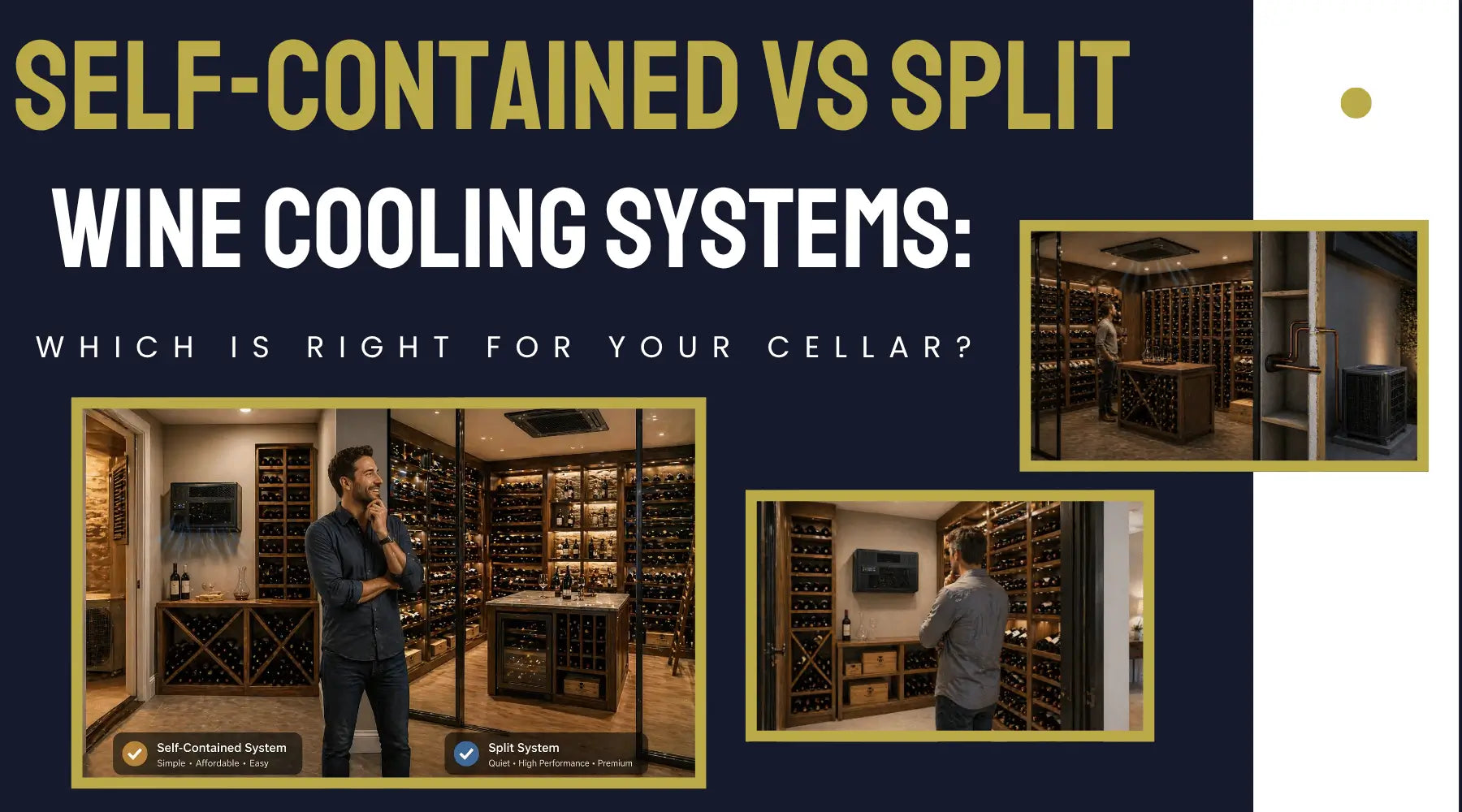
Introduction: Preserving Your Wine Collection with the Right Cooling Solution
Choosing the right wine cellar cooling system is essential for protecting your collection and ensuring your wines age gracefully. With options like self-contained and split systems, it can be challenging to know which setup best fits your cellar, space, and design vision. This guide compares these two popular types, explains their pros and cons, and helps you select the best solution for your wine storage needs.
For a comprehensive overview of wine storage and cooling options—including sizing, installation, and maintenance—explore our Wine Cooling System Buying Guide.

Why Wine Cellar Cooling Matters
Wine is highly sensitive to temperature and humidity. Fluctuations can spoil your collection, cause corks to dry out, and ruin flavors. A dedicated wine cellar cooling system maintains a stable environment—typically 55°F–58°F and 50%–70% relative humidity—ensuring your investment is protected for years to come. Standard HVAC systems simply can’t deliver the specialized climate control that wine requires.
If you want to dive deeper into optimal storage conditions, check out our Wine Storage Temperature Guide and Wine Storage Humidity Control.
Wine Cooling System Types Explained
Before diving into the comparison, let’s clarify the main types of wine cooling systems:
- Self-Contained Systems: All-in-one units, often installed through the wall. Simple to install and best for smaller spaces. Browse our self-contained ducted wine cellar cooling units and through-the-wall wine cellar cooling units for reliable options.
-
Split Systems: These separate the evaporator (inside or near the cellar) and the condenser (placed remotely, indoors or outdoors). They come in two main varieties:
- Ducted Split Systems: Use ductwork to deliver cooled air into the cellar. Discover our ducted split wine cellar cooling units.
- Ductless Split Systems: The evaporator is mounted inside the cellar and connected to the condenser by refrigerant lines—no ductwork required. Explore our ductless split wine cellar cooling units.
For a full selection of options, see our wine cellar cooling units collection.
For further reading on system comparisons, visit Through-the-Wall vs Ducted Wine Cooling and Self-Contained vs Split Wine Cooling Systems.
What Is a Self-Contained Wine Cooling Unit?

A self-contained wine cooling unit houses both the evaporator and condenser in a single chassis. Typically installed through an interior wall, these units vent heat into an adjacent room or, in some cases, to the outdoors.
How does a self-contained wine cooler work?
The unit draws warm air from the cellar, cools it, and returns it to the room while expelling heat through its rear or side vents. Because everything is contained in one unit, installation and maintenance are straightforward.
Pros:
- Simple, all-in-one design
- Lower upfront cost
- Quick installation—often a DIY project
- Ideal for small wine cellars, closets, or under-stairs spaces
Cons:
- Can be noisier, as all components are inside or near the cellar
- Vents heat into an adjacent room, which must be well-ventilated
- Limited cooling capacity—best for cellars up to around 1,000 cubic feet
- Less visually discreet; the unit is visible inside the cellar
Best for: Homeowners with small to medium cellars, retrofit projects, or those seeking a cost-effective, easy-to-install solution.
For more on sizing, see What Size Wine Cellar Cooling Unit Do I Need?.
Explore our self-contained ducted wine cellar cooling units and through-the-wall wine cellar cooling units for product choices.
What Is a Split Wine Cooling System?

A split wine cooling system divides the cooling process between two main components: the evaporator (inside or near the wine cellar) and the condenser (placed remotely, often outside or in a mechanical room). The two are connected by refrigerant lines.
How does a split wine cooling system work?
The evaporator cools the air inside the cellar, while the condenser—located remotely—dissipates heat and noise away from your collection. Split systems come in two forms:
- Ducted Split: The evaporator is located outside the cellar, and cool air is delivered via ducts. Only discreet vents are visible in the cellar.
- Ductless Split: The evaporator is installed inside the cellar, but the condenser is remote, reducing noise.
Pros:
- Quieter operation inside the cellar (especially ducted options)
- Greater flexibility for installation and aesthetics
- Higher cooling capacity—suitable for larger or glass-enclosed cellars
- No heat vented into adjacent rooms
Cons:
- Higher upfront and installation costs
- Requires professional installation (HVAC technician)
- More complex maintenance (refrigerant lines, remote components)
- May require more planning, especially in retrofit situations
Best for: Large cellars, glass displays, commercial wine rooms, high-end residential projects, or anyone prioritizing quiet, hidden operation and superior climate control.
Discover our ducted split wine cellar cooling units and ductless split wine cellar cooling units to find the best fit for your cellar design.
If you’re comparing leading brands, read WhisperKOOL vs Breezaire.
Integration and Space Planning
A key factor in choosing between self-contained and split wine cooling systems is how seamlessly each type integrates with your wine cellar’s design and layout. Effective climate planning goes beyond just cooling capacity—it’s about creating a space that looks beautiful, functions efficiently, and protects your collection for the long term.
Self-Contained Systems: Compact and Convenient
Self-contained wine cooling units are housed within a single chassis, making them a popular choice for custom wine cabinets, garage wine cellar conversions, and smaller spaces where simplicity is paramount. Their through-the-wall installation means the unit is visible, and the supply/return vents are typically located on the unit itself. While this can be convenient for quick retrofits, it may impact the overall aesthetics of a glass enclosure or a high-end wine cellar display.
Ventilation is crucial for self-contained systems. They must exhaust warm air into an adjacent, well-ventilated room—such as a mechanical space or unfinished basement. When planning integration, consider the size and usage of the adjoining room to ensure it can handle the additional heat load. The thermostat is often built into the unit or mounted nearby for easy access.
For more on garage and unconventional spaces, see our Garage & Outdoor Wine Cooler Guide.
Split Systems: Flexible and Discreet
Split wine cooling systems, whether ducted or ductless, offer greater flexibility for integration and space planning. In ductless split setups, the evaporator is mounted inside the cellar, with the condenser hidden remotely—ideal for maintaining clean lines in a glass-enclosed wine cellar or a modern, open-concept display. Ducted split systems take this a step further: all major components can be completely hidden from view, with only discreet supply and return vents visible. This allows for a truly seamless look, perfect for luxury installations or custom wine cabinets where aesthetics are a top priority.
If you’re looking for more flexible storage solutions, explore our wine coolers collection, including built-in wine coolers and freestanding wine coolers.
For glass cellars, see our Glass Wine Cellar Cooling Solutions.
Split systems can also be integrated with existing HVAC infrastructure in some cases, allowing for a unified climate control approach throughout the property. However, this requires careful planning and is best handled during new construction or major renovations.
Design Considerations and Best Practices
- Ductwork: Ducted split systems require space for ductwork, which should be planned early in the design process to avoid compromising cellar aesthetics or storage capacity.
- Hidden Components: Both ductless and ducted splits allow most mechanical components to be hidden outside the cellar, preserving the visual appeal of your wine display.
- Thermostat Location: For both system types, place the thermostat in an accessible, central location within the cellar for accurate temperature readings and convenient adjustments.
- Glass Enclosures: For glass wine rooms, split systems are generally preferred, as they handle larger heat loads and maintain the clean, minimal look that glass enclosures demand.
- Garage Wine Cellar Conversion: Self-contained units can be a good fit for garage conversions, provided there’s adequate ventilation for heat exhaust. For more extensive conversions, a split system may be better suited to handle larger spaces and varied insulation levels.
Whether you’re building a showpiece glass enclosure, converting a garage, or designing a custom wine cabinet, thoughtful integration and space planning will ensure your cooling system enhances both the performance and appearance of your wine cellar. Early climate planning, attention to ductwork and ventilation, and careful selection of visible components are all essential steps toward a cellar that’s as beautiful as it is functional.
Noise Levels and Guest Experience

When designing or upgrading a wine cellar, acoustic comfort is a critical consideration—especially if your cellar is a showpiece or located near entertaining spaces. The noise generated by your cooling system can significantly affect the atmosphere, both inside the cellar and in adjoining rooms. Understanding how different system types manage sound will help you create a more enjoyable environment for guests and residents alike.
If noise is a priority, explore our Silent Wine Cooling Systems.
Self-Contained Systems: Noticeable Sound in the Cellar and Beyond
Self-contained wine cooling systems house the compressor, condenser, and evaporator within a single unit. Because all mechanical components are located together—often inside or directly adjacent to the cellar—these systems tend to generate more operational noise. The hum of the compressor and the movement of fans can be clearly heard within the wine cellar, and sometimes even in the adjoining room where the unit vents heat.
For cellars that double as tasting rooms or are situated near living spaces, this noise can disrupt conversation and detract from the overall guest experience. Additionally, if the adjoining room is used frequently, the increased sound levels may become a nuisance over time.
Split Systems: Quiet Performance for Enhanced Enjoyment
Split wine cooling systems separate the evaporator (inside or near the cellar) from the condenser and compressor (located remotely, such as outdoors or in a mechanical room). By moving the noisiest components away from the wine cellar, split systems significantly reduce the sound experienced within the space. Ducted split systems offer the quietest solution, with only the gentle movement of air through supply vents being noticeable.
This quiet operation makes split systems ideal for wine cellars that are part of open-concept living spaces, glass enclosures in restaurants, or any setting where noise sensitivity is a concern. Guests can enjoy tastings, events, or quiet reflection without the distraction of persistent background noise.
Additional Considerations for Acoustic Comfort
- Cooling Unit Installation: Professional installation can help minimize vibration and ensure that mounting surfaces do not amplify noise.
- Wine Cellar HVAC Design: Proper placement of the evaporator and thoughtful routing of ductwork can further reduce sound transmission.
- Humidity Issues and Temperature Fluctuations: Both system types should be sized and installed correctly to prevent excess cycling, which can increase noise and cause climate instability.
Summary: For homeowners and businesses prioritizing a refined guest experience, split systems—especially ducted varieties—offer superior acoustic comfort. Self-contained systems, while efficient and cost-effective for smaller cellars, may introduce noticeable noise that could impact enjoyment in the wine cellar and adjacent rooms. Always consider noise sensitivity and the intended use of your space when selecting a wine cellar cooling system.
Self-Contained vs Split Wine Cooling Systems: Key Differences
Here’s a side-by-side comparison to help clarify the distinctions:
| Feature | Self-Contained System | Split System (Ducted/Ductless) |
|---|---|---|
| Installation | Simple, DIY possible, through-the-wall | Professional install, more complex |
| Noise | Louder (all components together) | Quieter (condenser is remote) |
| Aesthetics | Unit visible in cellar | Minimal or no equipment visible |
| Heat Exhaust | Exhausts heat into adjacent room | Remote condenser dissipates heat |
| Cooling Capacity | Best for small to medium cellars | Suitable for large or luxury cellars |
| Cost (Initial) | Lower upfront cost | Higher upfront cost |
| Maintenance | Easier, but may require full unit replacement | Requires HVAC technician, but more flexible long-term |
| Energy Efficiency | Adequate for smaller spaces | More efficient for larger or high-demand environments |
For more detailed comparisons, check out Best Wine Cellar Cooling Units by Cellar Type.
How to Choose the Best Wine Cellar Cooling System Type
Selecting the right system depends on several key factors:
-
Cellar Size and Layout:
- Small cellars (under 1,000 cu. ft.): Self-contained is often sufficient.
- Large or glass cellars: Split systems provide more power and even cooling.
-
Need help sizing? Visit our Wine Cooling System Sizing Guide.
-
Noise Sensitivity:
- If your cellar is near living areas or in a restaurant, split systems offer quieter operation.
-
Learn more in our Silent Wine Cooling Systems.
-
Aesthetics:
- Want a clean, equipment-free look? Ducted split systems keep everything hidden.
-
Budget:
- Self-contained units are more affordable upfront and easier to install.
- Split systems cost more initially but may offer better long-term value in larger cellars.
-
For cost details, see Wine Cellar Cooling System Cost.
-
Installation Complexity:
- Self-contained units can be installed by handy homeowners.
- Split systems require licensed HVAC professionals.
-
Read about Wine Cellar Cooling Installation Requirements.
-
Future Expansion:
- If you plan to grow your collection or upgrade your cellar, a split system offers more flexibility.
Cost and Installation Considerations

- Self-Contained Wine Cooling Unit Cost: Lower purchase price, minimal installation fees. Expect to pay more if venting to the outdoors or for higher-capacity models.
- Split Wine Cooling System Cost: Higher equipment and installation costs due to refrigerant lines, ductwork (if applicable), and professional labor. However, for large or commercial projects, the investment pays off in performance and longevity.
-
Installation Requirements:
- Self-contained: Needs a suitable wall and an adjacent, ventilated room.
- Split: Requires space for remote condenser, refrigerant lines, and possibly ductwork.
-
DIY vs Professional Install:
- Self-contained can be DIY.
- Split systems should always be installed by a certified HVAC technician.
For more on avoiding common mistakes, see Wine Cellar Cooling Mistakes.
Real-World Scenarios and Recommendations
- Best for Small Home Cellars: Self-contained systems are perfect for closets, under-stair spaces, or compact rooms where budget and simplicity are priorities.
- Best for Large or Glass-Enclosed Cellars: Split systems (especially ducted) deliver even, quiet cooling and preserve design aesthetics.
- Quiet Operation Needed: Split systems, especially ducted, are ideal when silence is golden.
- Energy Efficiency: Larger cellars benefit from split systems’ efficiency, while small spaces are well-served by self-contained units.
- Residential vs Commercial: Residential projects often start with self-contained, but high-end homes and commercial spaces nearly always opt for split systems for performance and design flexibility.
For more inspiration, see our Best Wine Storage Solutions for Luxury Kitchens.
Conclusion

The choice between a self-contained and a split wine cooling system depends on your cellar’s size, location, design goals, and budget. Self-contained units offer simplicity and affordability for smaller projects, while split systems deliver superior performance, quiet operation, and design flexibility for larger or high-end cellars.
Ready to choose your cooling solution? Browse our complete wine cellar cooling units collection or shop by type: self-contained, ducted split, or ductless split.
Still unsure which is right for you? Consult a wine cellar cooling expert to assess your space and recommend the best solution—ensuring your wine collection is protected for years to come.