
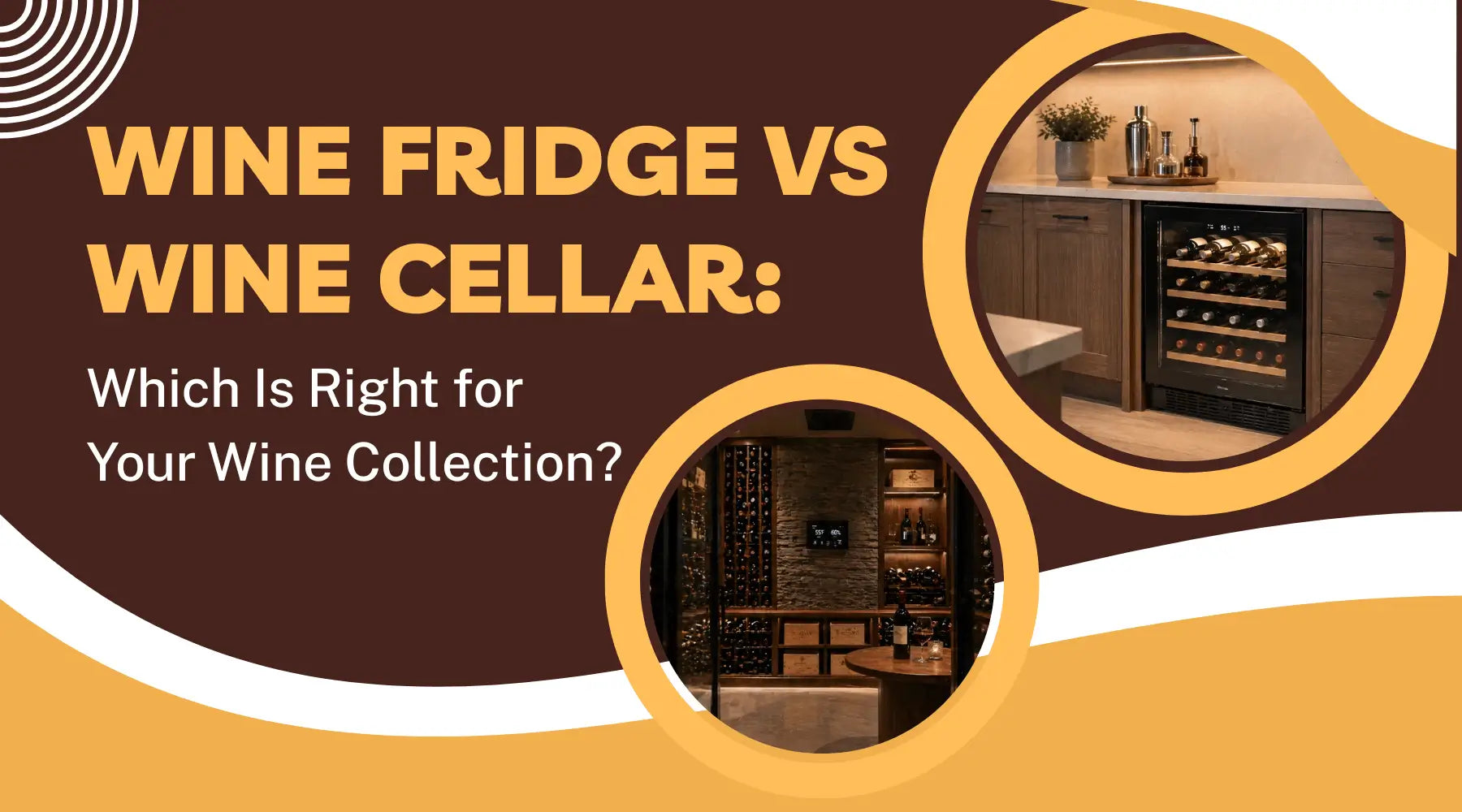
Introduction: Why Wine Storage Matters
Proper wine storage is essential for preserving the flavors, aromas, and value of your favorite bottles. Whether you’re a casual enthusiast or a serious collector, choosing between a wine fridge and a wine cellar can be confusing. Although these terms are often used interchangeably, they offer very different features and benefits. In this guide, we’ll break down the differences, compare pros and cons, explain the technical features, and help you decide which option is best for your needs.
For a comprehensive overview of wine storage solutions and expert tips on choosing the right system, check out our Wine Storage & Cooling Systems Buying Guide.
If you’re ready to explore product options, browse our wine coolers collection or discover advanced wine cellar cooling units for long-term preservation.

Understanding Wine Storage Options
Before we compare, let’s clarify some common terms:
- Wine Fridge / Wine Cooler / Wine Refrigerator: Compact appliances designed to keep wine at optimal serving temperature. Ideal for short-term storage and everyday enjoyment. To compare different types, see our guide on built-in vs freestanding wine coolers.
- Wine Cellar: A dedicated room or specialized appliance that creates ideal long-term storage conditions by precisely controlling temperature, humidity, light, and vibration. If you’re planning a custom space, learn how to build a wine cellar.
What Is a Wine Fridge?

A wine fridge—also known as a wine cooler or wine refrigerator—is a convenient appliance for keeping your wine at serving temperature. Key features include:
- Adjustable temperature settings (usually 40°F–65°F / 5°C–18°C)
- Specially designed shelves for wine bottles
- Compact, countertop, built-in, or undercounter models
- Limited humidity and vibration control
If you’re interested in compact solutions, check out our countertop wine coolers and undercounter wine coolers for flexible, space-saving storage.
For help determining the right size for your needs, visit our What Size Wine Cooler Do I Need? guide.
Best for:
- Storing wine for a few months to a couple of years
- Keeping bottles ready to drink
- Wine lovers with small collections or limited space
For more options by capacity, see our Best Wine Coolers by Bottle Capacity.
Not ideal for:
- Long-term aging
- Large or valuable collections
- Wines that require precise humidity or vibration protection
If you’re debating between different cooling technologies, our Thermoelectric vs Compressor Wine Coolers article can help you choose.
What Is a Wine Cellar?

A wine cellar is designed to mimic the stable environment of traditional underground storage, allowing wine to mature gracefully over years or even decades. Wine cellars can be custom-built rooms or specialized cabinets with advanced climate control. Key features include:
- Precise temperature control (usually around 55°F / 13°C for aging)
- Humidity regulation (typically 50–70% to keep corks from drying out)
- Protection from light and UV rays
- Vibration reduction for undisturbed aging
- Storage for medium to large collections
Looking for specialized equipment? Discover our range of wine cellar cooling units designed for both passive and active cellars.
If you’re considering different types of cooling systems, read our comparison of Self-Contained vs Split Wine Cooling Systems and Through-the-Wall vs Ducted Wine Cooling.
Types of wine cellars:
- Passive Cellar: Uses natural insulation (like a basement or underground room)
- Active Cellar: Equipped with a dedicated climate control system
For installation tips and requirements, see our Wine Cellar Cooling Installation Requirements.
Best for:
- Long-term aging of wine
- Serious collectors and investors
- Storing a wide variety of wine types and vintages
Not ideal for:
- Small spaces
- Short-term storage
- Tight budgets
Technical Features and Components: Wine Cellar vs. Wine Fridge
Understanding the technical aspects of wine storage can help you make an informed decision. Here’s how wine cellars and wine fridges differ when it comes to engineering and environmental control:
Thermostat Control
- Wine Cellar: Utilizes a high-precision thermostat to ensure stable temperatures—essential for aging wine and preventing spoilage.
- Wine Fridge: Offers adjustable temperature, but may not maintain the same stability, especially with ambient temperature changes.
For optimal storage and serving, review our Wine Storage Temperature Guide.
Compressor and Dampers
- Wine Cellar: High-quality compressors are mounted on dampers to reduce vibrations. This protects wine from agitation, preserving clarity and flavor.
- Wine Fridge: Uses standard compressors, which may generate more vibration and noise. Some models offer basic vibration reduction.
If silent operation is important to you, check out our Silent Wine Cooling Systems.
Evaporator and Cold Air Circulation
- Wine Cellar: Advanced evaporators circulate cold air evenly, maintaining consistent temperature and humidity throughout the space.
- Wine Fridge: Basic evaporators may not distribute cold air as evenly, and humidity control is usually limited.
Humidity Control
- Wine Cellar: Maintains ideal humidity (50–70%) to keep corks moist and prevent oxidation, using specialized systems and insulation.
- Wine Fridge: Most do not actively control humidity, which can lead to corks drying out during extended storage.
Learn more about maintaining the right environment in our Wine Storage Humidity Control article.
Insulation Quality
- Wine Cellar: Built with thick, high-quality insulation to minimize temperature fluctuations and maintain a stable environment.
- Wine Fridge: Thinner insulation, designed for short-term storage rather than long-term protection.
Lighting Considerations
- Wine Cellar: Often features UV-protected doors and minimal lighting, sometimes with LED options that emit less heat and UV radiation.
- Wine Fridge: Many have glass doors for display, but not all offer UV protection. Interior lighting is often aesthetic—check for UV-safe features.
For stylish and protective options, explore our built-in wine coolers and freestanding wine coolers.
Additional Features
- Wine Racks: Both options include racks, but cellars often provide custom racking for larger or diverse collections.
- Wine Cellar Doors: Specialized doors with proper seals and insulation help maintain environmental control in cellars.

Key Differences: Wine Fridge vs Wine Cellar
Here’s a side-by-side comparison to highlight the major differences:
| Feature | Wine Fridge / Cooler | Wine Cellar |
|---|---|---|
| Temperature Control | Good for serving temps | Precise, stable for aging |
| Humidity Control | Limited or none | Yes, maintains ideal humidity |
| Vibration Control | Minimal, may have some vibration | Designed to minimize vibration |
| Light Protection | Some UV protection, glass doors | Often full protection or UV glass |
| Capacity | Small to medium (6–50+ bottles) | Medium to large (50–1000+ bottles) |
| Storage Duration | Short-term (months to ~2 years) | Long-term (years to decades) |
| Installation | Plug-and-play, portable, built-in | Requires dedicated space/build-out |
| Cost | Lower ($100–$2,000+) | Higher ($2,000–$100,000+) |
| Home Value Impact | Modest | Can increase property value |
Want to compare by capacity or style? Shop our single zone wine coolers, dual zone wine coolers, and explore top wine storage brands.
If you’re considering storing wine in unique environments, see our Garage & Outdoor Wine Cooler Guide.
Pros and Cons
Wine Fridge (Wine Cooler/Refrigerator)
Pros:
- Affordable and accessible
- Simple installation and use
- Keeps wine at ready-to-serve temperature
- Compact and space-saving
For cleaning and care tips, read our Wine Cooler Cleaning and Maintenance guide.
Cons:
- Limited humidity and vibration control
- Not suitable for long-term aging
- Smaller storage capacity
- Less impact on home value
Wondering if a wine fridge is worth it? Find out in Are Wine Coolers Worth It?.
Wine Cellar
Pros:
- Ideal for aging and preserving wine quality
- Stable environment for all wine types
- Customizable to collection size and space
- Potential to increase home value
Explore best wine cellar cooling units by cellar type for tailored recommendations.
Cons:
- Higher upfront investment
- Requires dedicated space and planning
- More complex to maintain
- May be unnecessary for casual drinkers
Curious about costs? See our Wine Cellar Cooling System Cost breakdown.
Which Should You Choose?

The best wine storage solution depends on your lifestyle, collection size, and long-term goals:
- Casual wine drinkers or those with limited space: A wine fridge is a practical, affordable choice for keeping bottles at serving temperature and ready to enjoy. It’s perfect if you consume your wine within a couple of years and don’t plan to age bottles long-term. Explore our wine coolers for the best options.
- Collectors, investors, or serious enthusiasts: A wine cellar is the gold standard for preserving and aging wine. If you want to build a collection, protect valuable bottles, or age wine for years, a cellar’s stable environment and climate control are worth the investment. Browse our wine cellar cooling units for advanced solutions.
- Hybrid approach: Many wine lovers use a wine fridge for everyday bottles and a wine cellar for aging prized vintages. For inspiration, see our Best Wine Storage Solutions for Luxury Kitchens.
Ready to start your collection? Discover products from top brands like Smith & Hanks, Cavavin, and Allavino.
Conclusion

Choosing between a wine fridge and a wine cellar comes down to your goals, collection size, and available space. Wine fridges offer convenience and affordability for everyday enjoyment, while wine cellars provide the ideal environment for aging and protecting valuable bottles. Assess your needs, consider your budget, and select the storage option that best supports your wine journey.
Explore our full selection of wine coolers, wine cellar cooling units, and specialty wine storage brands to find the ideal solution for your wine journey.