
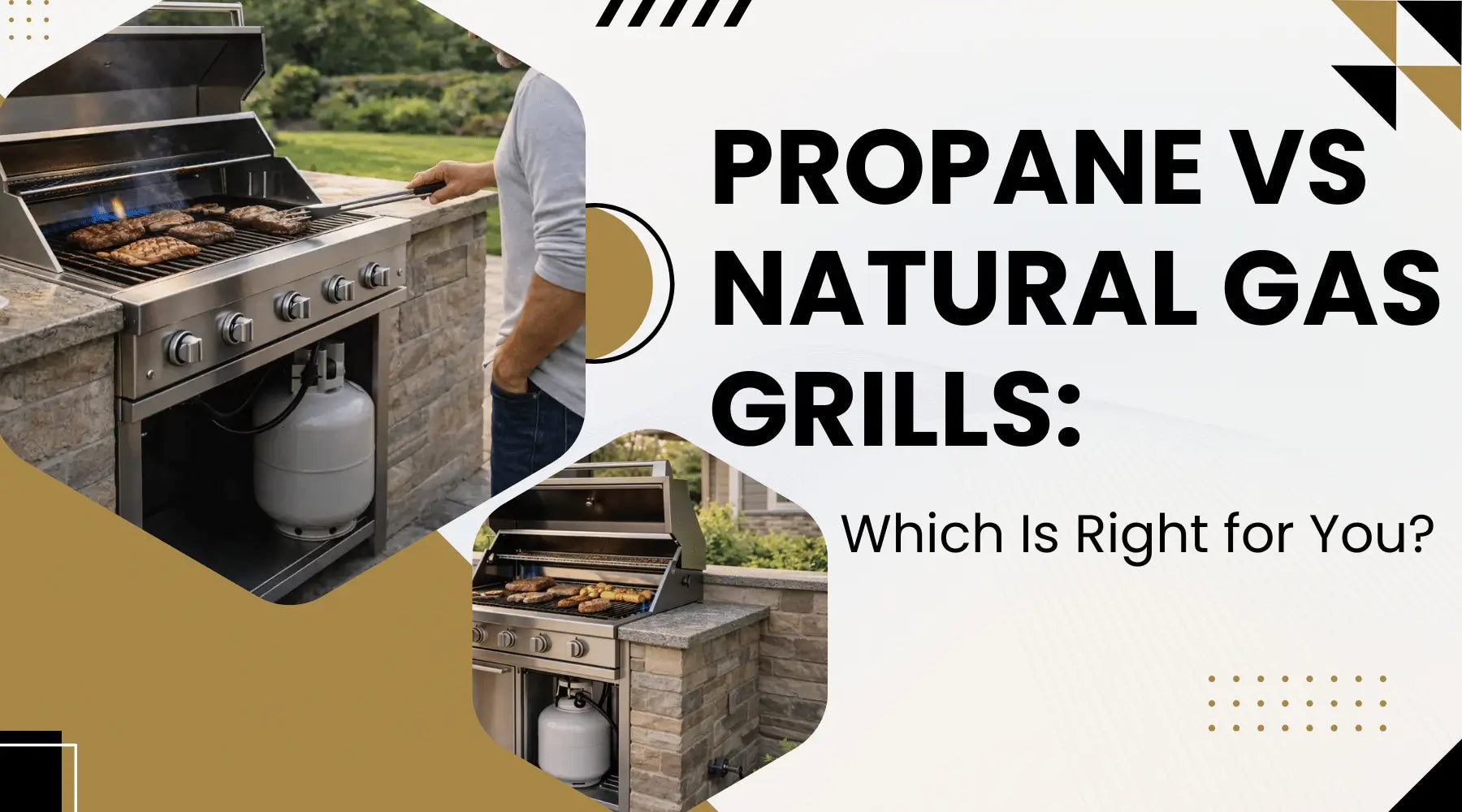
Introduction: Choosing Between Propane and Natural Gas Grills
Choosing the perfect outdoor grill often comes down to one big decision: propane vs natural gas grills. Both fuel types have their own advantages, drawbacks, and ideal use cases. This in-depth gas grill comparison will help you understand the pros and cons of propane grills and natural gas grills, so you can confidently select the best option for your backyard barbecues.
If you’re also considering a full outdoor kitchen setup, check out our guide on designing a luxury outdoor kitchen with premium appliances for inspiration and expert tips.
Gas Grill Comparison: Propane vs Natural Gas
When considering a new grill, the main difference lies in the fuel source. Let’s break down how propane and natural gas grills stack up in terms of cost, convenience, performance, and overall experience.
While you’re comparing grill types, you might also be interested in our guide on built-in vs freestanding outdoor grills to find the right fit for your space.
Discover top-rated options from American Made Grills, Fire Magic, Blaze, and Summerset to compare features and fuel compatibility.
Propane Grills

Propane grills use liquid propane stored in portable tanks. They’re the most popular choice for backyard grilling, and for good reason.
Propane Grill Advantages
- Portability: Propane grills can be placed almost anywhere—perfect for patios, tailgating, or camping.
- Easy Setup: Simply connect the tank, and you’re ready to cook.
- High Heat Output: Propane burns hotter than natural gas, often reaching higher temperatures more quickly.
- Widely Available: Propane tanks are easy to find at most grocery, hardware, or convenience stores.
Pros and Cons of Propane Grills
Pros:
- Flexible placement (no need for a gas line)
- Quick to heat up
- Ideal for renters or those who move frequently
Cons:
- Tanks need to be replaced or refilled regularly
- Running out of propane mid-cook is possible
- Slightly higher fuel cost per use compared to natural gas
Natural Gas Grills

Natural gas grills connect directly to your home’s gas supply. While they require a fixed installation, they offer several unique benefits.
Natural Gas Grill Benefits
- Unlimited Fuel Supply: No more running out of gas mid-barbecue.
- Lower Operating Cost: Natural gas is typically less expensive than propane.
- Environmentally Friendly: Burns cleaner, producing fewer emissions.
- Convenience: Never worry about refilling tanks.
Pros and Cons of Natural Gas Grills
Pros:
- Consistent fuel supply
- Lower long-term fuel costs
- Eco-friendly option
Cons:
- Requires professional installation and a gas line
- Not portable—grill stays in one location
- Higher upfront installation cost
Energy Efficiency and Performance
When comparing propane vs natural gas grills, energy efficiency and performance are key factors. Understanding BTU ratings, energy density, and heat output can help you choose the best grill for your needs.
To keep your grill and other outdoor appliances working their best year-round, learn how to protect outdoor appliances from weather damage.
BTU Rating and Energy Density
The energy output of a grill is measured in British Thermal Units (BTUs). A higher BTU rating generally means the grill can produce more heat, but energy efficiency also depends on how well the grill retains and distributes that heat.
Propane has a higher energy density than natural gas, which means it can deliver more heat per unit. As a result, propane grills often reach higher temperatures faster, making them ideal for quick searing and achieving a good char on your food.
Consistent Heat Output and Temperature Control
Natural gas grills are connected to a continuous fuel supply, providing consistent heat output throughout your cooking session. This reliability is especially useful for long or slow cooks, as you don’t have to worry about running out of fuel mid-grill.
Temperature control is crucial for grilling performance. Both propane and natural gas grills offer precise temperature adjustments, but propane’s higher energy density can make it slightly easier to achieve and maintain high-heat settings for searing. However, modern natural gas grills are designed to offer excellent temperature control as well.
Energy Efficiency Considerations
While propane grills deliver more energy per unit, natural gas is typically less expensive and burns cleaner, making it a more energy-efficient choice for frequent grillers. If you grill often and want to minimize fuel costs and environmental impact, a natural gas grill may be the better option.
In Summary
- Propane grills provide higher heat output and quick temperature changes, thanks to greater energy density.
- Natural gas grills offer consistent heat and lower long-term fuel costs, with reliable temperature control.
- Choosing the right grill depends on your grilling style and frequency—consider what matters most for energy efficiency and performance in your outdoor cooking setup.
For more tips on grilling in every season, check out our recommendations for the best outdoor refrigerators for all seasons.
Flavor Impact: Does Fuel Source Affect the Taste?

Many grill enthusiasts wonder whether using propane or natural gas as a fuel source changes the flavor of their food. While both options deliver the high heat needed for classic grilling, subtle differences can influence aroma, charred taste, and overall enjoyment.
If you’re interested in exploring more ways to cook outdoors, see our comparison of outdoor pizza ovens vs grills.
Aroma and Charred Taste
The main flavor elements of grilled food—like the smoky taste, sear marks, and juicy tenderness—come from the cooking technique and the interaction of heat with seasoning and fats, rather than the fuel source itself. Both propane and natural gas grills use an open fire to create that signature sizzle, locking in juices and producing the iconic aroma of sizzling barbecued sausages or perfectly seared steaks.
Propane vs Natural Gas: Subtle Differences
Some grillers claim that propane, due to its higher energy density, can produce a slightly hotter flame, which may enhance the sear and contribute to a deeper charred taste. This can be especially noticeable when grilling foods that benefit from quick, intense heat, like steaks or vegetables.
Natural gas, on the other hand, provides a consistent and steady heat, which is ideal for longer cooks and maintaining juicy tenderness in larger cuts. However, most taste tests suggest that the difference in flavor between propane and natural gas is minimal, especially when proper grilling techniques and good seasoning are used.
Cooking Technique Matters Most
Ultimately, the biggest impact on flavor comes from your grilling skills—how you manage heat, when you add seasoning, and how you handle the open fire. Using wood chips or smoker boxes can also add a smoky taste, regardless of whether you’re using natural gas or propane.
In Summary
- Both propane and natural gas grills can deliver delicious, flavorful results.
- Propane may offer a slightly stronger sear due to its hotter flame, while natural gas excels at consistent, even cooking.
- To get the best aroma, juicy tenderness, and charred taste, focus on your cooking technique, seasoning, and use of grilling accessories—regardless of the fuel type.
Outdoor Grill Fuel Options: What to Consider

When choosing the right gas grill, think about your grilling habits and outdoor space:
-
Do you need portability?
Propane is best for flexibility. -
Do you grill often at home?
Natural gas may save money in the long run. -
Are you concerned about the environment?
Natural gas burns cleaner. -
Is convenience a priority?
Natural gas means no more swapping tanks.
For a complete outdoor cooking setup, browse our selection of outdoor appliances, including outdoor refrigerators and outdoor beverage centers.
If you love to entertain, make it easy with an outdoor ice maker or outdoor kegerator for your backyard gatherings.
Which Is Better: Propane or Natural Gas Grill?
Ultimately, the best choice depends on your needs and preferences.
- Choose a propane grill if: You want portability, higher heat, and easy setup.
- Choose a natural gas grill if: You value convenience, lower fuel costs, and an eco-friendly solution.
Curious how popular grill brands compare? See our in-depth look at American Made Grills vs Fire Magic.
Conclusion: Choosing the Right Gas Grill

Both propane and natural gas grills have their strengths. Consider how often you grill, where you’ll use your grill, and what matters most to you—whether it’s portability, cost, or environmental impact. By weighing the pros and cons of propane grills and natural gas grills, you’ll be able to pick the perfect grill for your outdoor cooking adventures.
Ready to upgrade your backyard? Check out our curated collections of outdoor ovens and premium Artisan by Alfresco grills for even more outdoor cooking possibilities.